


The unlisted shares of Metropolitan Stock Exchange of India (MSEI) have witnessed one of the most dramatic sentiment cycles in India’s private market space over the past few years. From prolonged stagnation to a sharp FOMO-driven rally, followed by correction and renewed optimism, the journey has been anything but linear.
With recent operational developments such as mock trading sessions and the introduction of a Liquidity Enhancement Scheme, investors are once again asking:
What next for MSEI?
To understand where things may head, it is important to first understand where the exchange stands today.
Introduction: Metropolitan Stock Exchange of India (MSEI)
The Metropolitan Stock Exchange of India (MSEI) is a SEBI-recognized national stock exchange operating under the regulatory framework of the Securities and Exchange Board of India (SEBI) and the Reserve Bank of India (RBI).
MSEI provides an electronic and transparent trading platform across multiple segments, including:
- Capital Market
- Futures & Options
- Currency Derivatives
- Debt Market
The exchange commenced operations in the Currency Derivatives segment on October 7, 2008. It later launched its Capital Market and Futures & Options segments in February 2013.
Like NSE has NIFTY 50 and BSE has SENSEX, MSEI introduced its own flagship index — SX40.
The exchange has also received in-principle approval from SEBI to operationalize an SME platform, indicating its broader ambitions within India’s capital markets ecosystem.
Decoding the Share Price Journey of MSEI Unlisted Shares
Unlisted Arena
MSEI Unlisted Share Price
The Emotional Journey of an Investor (2017 – 2026)
“Illustrative representation of price movement based on historical unlisted market trends.”
2017–2024: Prolonged Stagnation
The unlisted shares of MSEI began gaining attention around 2017. Exchange businesses have historically attracted investor interest, and with MSEI trading at around ₹2 per share, it appealed to investors seeking long-term optionality at a low entry price.
However, NSE and BSE continued to dominate India’s exchange landscape. MSEI, positioned as the third exchange, struggled to generate meaningful volumes. Equity segment activity remained negligible, and even in the currency segment, volumes were limited.
Between 2017 and 2024, visible operational progress remained limited. Continued losses and lack of traction led to prolonged investor frustration, and the share price gradually declined toward ₹1.
December 2024: Strategic Investment & FOMO Rally
A major shift occurred in December 2024.
Prominent market participants — Billionbrains Garage Ventures (Groww), Rainmatter Investments (Zerodha), and Share India Securities Private Limited, etc — invested in the exchange via private placement at ₹2 per share.
The involvement of well-known brokerage houses significantly altered market sentiment. The investment was interpreted as a strategic endorsement of the exchange’s future potential.
Within days, the unlisted share price surged to around ₹12 — a sharp, sentiment-driven rally largely fueled by fear of missing out (FOMO).
2025: Correction and Reality Check
After touching highs in January 2025, the share price began a steady decline.
The rally had been driven primarily by sentiment rather than immediate operational transformation. As months passed without visible changes in liquidity or volume, investor enthusiasm cooled.
Reviving an exchange requires structural, regulatory, and ecosystem-level effort. Such change rarely happens overnight. However, market expectations had accelerated ahead of implementation.
By the end of 2025, the share price had corrected to around ₹2.50.
January 2026: Operational Announcements and Renewed Interest
In January 2026, MSEI announced the conduct of mock trading sessions and introduced a Liquidity Enhancement Scheme (LES) for the Equity Segment.
This marked a shift from perception-driven movement to structural action.
The announcements revived optimism, and the unlisted share price moved above ₹6 within days.
The key question now is whether structural measures translate into sustained participation.
Why Exchanges Are Long-Gestation Businesses
Before evaluating share price volatility, it is important to understand the nature of exchange businesses.
Stock exchanges operate on strong network effects:
- Companies prefer listing where liquidity exists.
- Traders prefer exchanges with active participation.
- Brokers allocate resources where client activity is meaningful.
This creates a “chicken-and-egg” situation — liquidity attracts liquidity, but initial momentum can take years to build.
An exchange may have:
- Regulatory approval
- Trading infrastructure
- Technology systems
Yet adoption depends on ecosystem participation. Strategic investors often think in long-term cycles, but market sentiment tends to react in short-term bursts.
This structural reality provides context to MSEI’s share price journey.
Buying MSEI Shares?
Get the latest rates and buy at the best price today.
Recent Events: Liquidity Enhancement Scheme Explained
What Has Been Announced?
MSEI introduced a formal Liquidity Enhancement Scheme (LES) to improve liquidity, market depth, and price discovery in its equity segment.
Objective of the Scheme
The scheme aims to:
- Ensure continuous two-way quotes
- Improve order book depth
- Narrow bid–ask spreads
In simple terms, the exchange wants to ensure there are always visible buyers and sellers, reducing execution gaps and improving trading confidence.
Designated Market Makers
Under the scheme:
- Two or more Designated Market Makers will be appointed
- Eligible participants must be active trading members with minimum net worth of ₹1 crore
- Selection will be done through a structured bidding process
Market makers are required to:
- Maintain presence in the order book for 85%–90% of market hours
- Provide minimum bid–offer values ranging from ₹50,000 to ₹1,50,000 across five order book levels
- Maintain tight spreads (as low as 5 basis points at the top level)
Incentives and Monitoring
To encourage participation:
- Market makers are eligible for incentives of ₹40 lakhs per month
- Exchange transaction charges are waived for scheme trades
- Incentives are performance-linked
Strict penalties apply for non-compliance, including deductions and potential suspension.
The scheme is currently scheduled to remain in effect until June 30, 2026.
Eligible Securities
The exchange has identified approximately 130 securities under the scheme, including several large and well-known Indian companies like Reliance Industries, TCS, Adani Enterprises, Asian Paints, DMART, Bajaj Finance, Bank of Baroda, Bharti Airtel, CDSL, Divis Lab, HCL Technologies, HDFC Bank, Hero MotoCorp, HAL, HUL, IOC, ICICI Bank, Hyundai, Infosys, Indigo, ITC, JioFin, Kaynes, Kotak Bank, L&T, LG Electronics, LIC, M&M, Maruti Suzuki, ONGC, PAYTM, PNB, SBI, Tata Motors, Titan, Varun Beverages, Vedanta, Vodafone Idea, Yes Bank and many others.
This suggests that the exchange intends to focus initially on recognized, high-interest stocks to stimulate activity.
What Is Expected to Roll Out Next?
Based on the circular and recent announcements, several possible developments may follow:
1. Activation of Live Trading in Identified Scripts
Mock sessions typically precede operational rollouts. Formal activation of live equity trading across identified securities may follow.
2. Gradual Volume Build-Up
If market makers maintain structured liquidity, order book visibility may improve. Sustainable volume, however, will depend on broker and client participation.
3. Scheme Evaluation and Extension
Given the defined tenure until June 2026, the exchange may extend, modify, or expand the scheme depending on initial results.
4. Broader Ecosystem Participation
True revival would require:
- Broker integration
- Institutional engagement
- Retail participation
Incentives may initiate liquidity, but organic participation determines sustainability.
What Ahead? Best Case vs Worst Case Scenarios
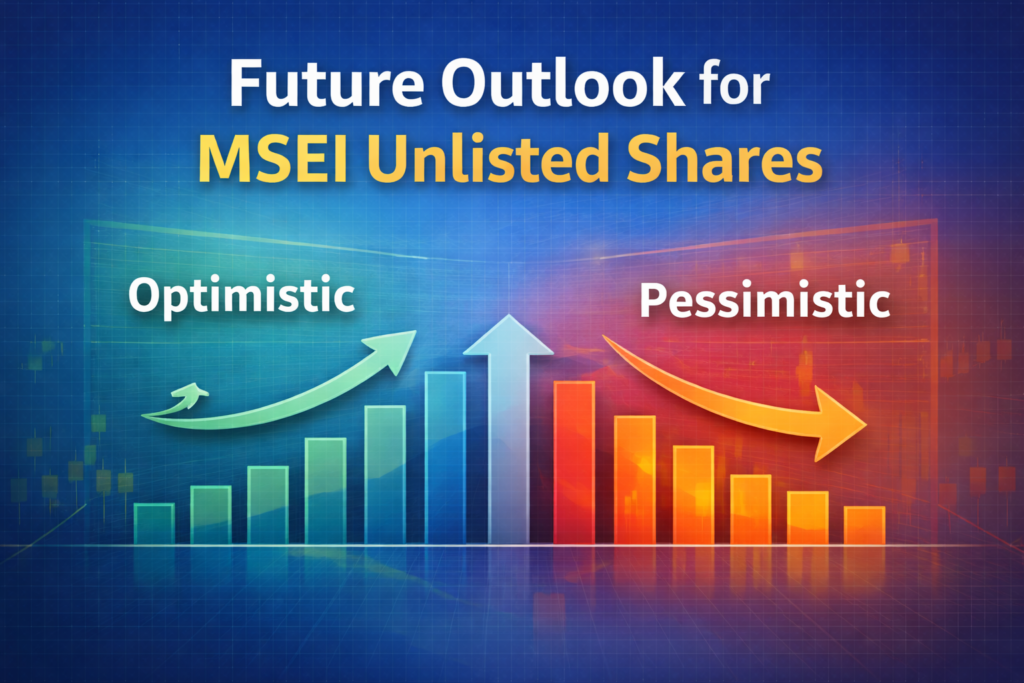
Best Case: Gradual Structural Revival
If the Liquidity Enhancement Scheme functions effectively:
- Order book depth improves
- Bid–ask spreads narrow
- Brokers gain confidence in execution
- Institutional and algorithmic participation may begin
Over time, positive network effects could develop. The exchange could gradually strengthen volumes, improve revenue visibility, and reduce losses.
Such transformation, however, would likely unfold over multiple years.
Base Case: Stable but Modest Progress
Market makers fulfill obligations, some activity develops, but broader adoption remains cautious.
In this scenario, MSEI stabilizes operations without rapid scaling.
Worst Case: Incentive-Driven Liquidity Only
If trading activity remains largely incentive-dependent and does not attract organic participation:
- Volumes may remain limited
- Post-incentive activity could decline
- Sentiment volatility may persist
Liquidity appearance would exist — but sustainability would remain uncertain.
Key Variables to Track
Rather than predicting outcomes, it may be more useful to monitor:
- Consistency of market maker participation
- Visible improvement in trading volumes
- Broker onboarding
- Continuity or expansion of the scheme
- Progress toward operational sustainability
These factors will likely shape the exchange’s long-term trajectory.
Conclusion: From Sentiment to Execution
The journey of MSEI’s unlisted shares reflects a cycle of expectation, optimism, correction, and renewed hope.
Earlier movements were largely sentiment-driven. The current phase introduces measurable structural action.
The introduction of mock trading sessions and a formal Liquidity Enhancement Scheme signals an attempt to address the exchange’s fundamental challenge — liquidity.
Whether this marks the beginning of gradual revival or another transitional chapter will depend not on announcements, but on participation.
Exchange businesses are ecosystem-driven. Infrastructure can be built through capital and policy — but sustainable liquidity is earned over time.
The coming months may determine whether Metropolitan Stock Exchange of India moves from volatility to viability.
Looking to Buy MSEI Unlisted Shares?
Get the latest price and assistance for a smooth transaction.
Connect with Us NowDisclaimer
This article is intended solely for informational and educational purposes. It does not constitute investment advice, recommendation, or an offer to buy, sell, or hold any securities, including unlisted shares of Metropolitan Stock Exchange of India.
The analysis is based on publicly available information and interpretation of recent developments. Actual outcomes may differ materially due to market conditions, regulatory changes, or operational factors.
Unlisted securities are inherently illiquid and involve higher risk compared to listed instruments. Investors should conduct their own due diligence and consult a qualified financial advisor before making any investment decisions.
The price chart is an illustrative representation intended to provide a broad understanding of historical trends. It does not reflect exact transaction prices or verified market data.
The author and publisher assume no responsibility for any direct or indirect losses arising from reliance on this content.


